
1785920767615~2

Google Gemini 3.0 Series: Features & Gemini 3.6 Flash Review

UPDATE DATE: AUGUST 2026

1. Why the Gemini 3.0 Platform Keeps Evolving

Google Gemini 3.0 is not a static single release—it is the foundational platform architecture that Google updates continuously through iterations like Gemini 3.1 Pro, 3.5 Flash, and the latest Gemini 3.6 Flash update.

  • Continuous Sub-Version Upgrades: Incremental releases (3.1, 3.5, 3.6) bring frontier speed and reasoning improvements directly to the existing Gemini 3 ecosystem.
  • High Token Efficiency: The latest Gemini 3.6 Flash update cuts wordy response text by 17%, delivering faster task completion at a lower cost.

2. Real-Time Multimodal Intelligence

By processing audio feeds, camera input, and text simultaneously, the Gemini 3 family handles live interaction and spatial grounding with virtually zero response delay.

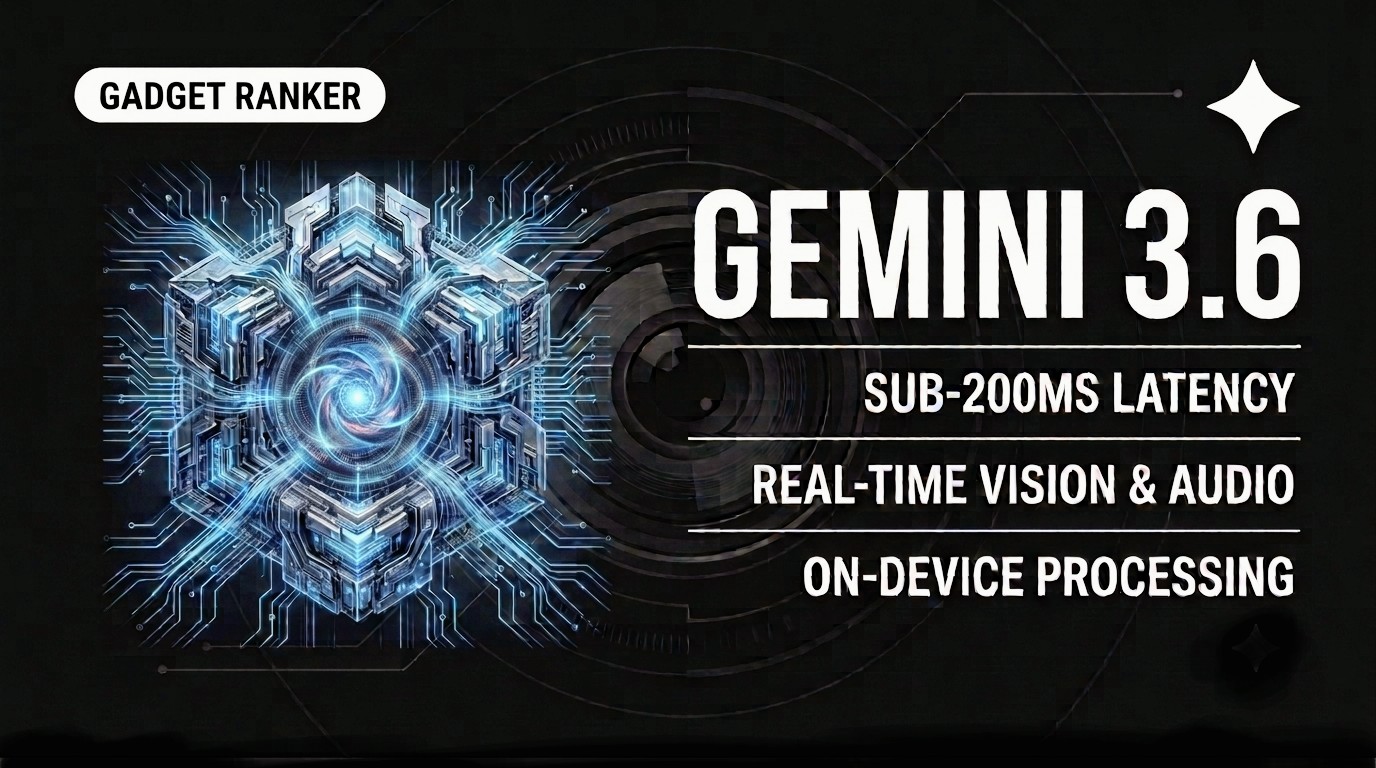
  • Sub-200ms Live Audio: Allows natural voice conversations where you can interrupt or change directions mid-sentence.
  • Spatial Camera Vision: Recognizes physical objects, reads onscreen text, and solves real-world visual problems directly via video.

3. Deep Workspace & Autonomous Integration

Embedded across Google Workspace, the Gemini 3 architecture moves past basic Q&A to execute multi-step background tasks across Docs, Gmail, and Drive.

  • Cross-Document Synthesis: Summarizes large PDF libraries, extracts structured data tables, and syncs notes automatically.
  • Autonomous Execution: Coordinates email drafts, calendar scheduling, and folder updates seamlessly in the background.

4. Industry Efficiency & High-Impact Workflows

Google Gemini delivers direct efficiency gains across enterprise and creative domains by combining real-time web search, long-context understanding, and multi-tool automation into a unified workflow.

  • Research & Market Intelligence: Synthesizes live web data, financial filings, and industry reports directly into executive summaries.
  • Software Engineering: Navigates multi-file codebases, executes unit tests, and refactors complex software repositories.
  • Document & Data Management: Processes massive PDF collections, extracts structured database records, and updates Google Docs automatically.
  • Everyday Operational Tasks: Drafts contextual email threads, manages schedules, and organizes complex projects without manual data copy-pasting.

5. Core Model Capability Evolution

A detailed look at how foundational AI capabilities—visual generation, reasoning controls, coding execution, and tool automation—have advanced across Gemini generations up to the latest 3.6 Flash update.

Core Capability Gemini 1.5 Series Gemini 2.5 Series Gemini 3.0 Platform (3.6 Flash)
Image & Visual Rendering Text-to-Image Generation High-Res Image Analysis Native 4K Synthesis & In-Image Text Precision
Thinking & Reasoning Single-Pass Inference Basic Chain-of-Thought Steps Tunable Thinking Depth & Low Token Verbosity
Coding & Engineering Single-Script Code Generation Repository Refactoring Autonomous Multi-File Planning & Code Execution
Tool & Computer Control Function Calling APIs Browser UI Task Steps Native Cross-App & Desktop Computer Use
Context & Memory State 1M Token Static Context 2M Token Expanded Processing 2M Token Dynamic Caching & Subagent Routing

6. Frontier Matchup

Comparing the updated Gemini 3.0 platform against competing frontier models highlights where Google's architecture holds a distinct operational advantage.

  • vs. ChatGPT (GPT-5.6 / 5.5): ChatGPT excels at standalone desktop coding workflows, whereas Gemini 3.6 Flash delivers faster real-time video/voice interaction and 24/7 background agent execution.
  • vs. Claude Opus 4.7: Claude specializes in long-form technical prose and structural reasoning, while Gemini 3 provides seamless native integration across Google Workspace.
  • vs. Perplexity: Perplexity focuses primarily on web research search citations, whereas Gemini 3 handles multi-modal camera feeds, audio streams, and live document edits.

7. Final Verdict & Official Source

The Gemini 3.0 platform—powered by continuous sub-version releases like 3.6 Flash—proves that Google isn't waiting for major integer releases to roll out major gains. Its low latency, token efficiency, and background agent capabilities make it a formidable workspace engine.

Scroll to Top